
Tissue typing
The immune system is designed to recognise and destroy bugs like bacteria and viruses, but a key part of this process is being able to recognise self so that the immune system does not attack our own bodies.
All living cells have surface markers called antigens, which can be recognised by the immune system. Human cells have antigens that differ from person to person, and are known as Human Leucocyte Antigens (HLA).
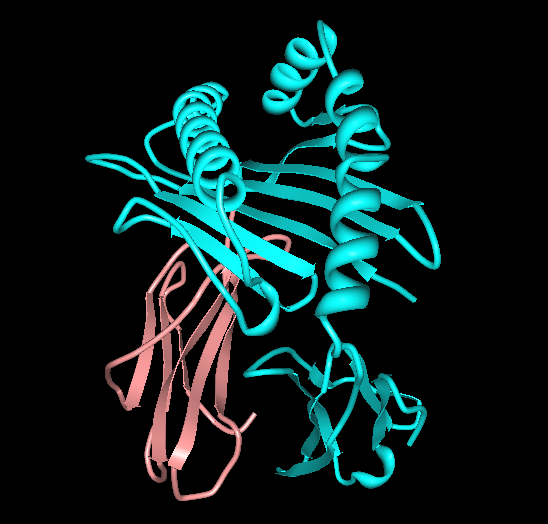
HLA
HLA antigens are not unique to each person, but come in classes and groups. For each group, we have two antigens, one inherited from each parent (although for each pair we can inherit the same antigen from both parents if they have antigens in common).
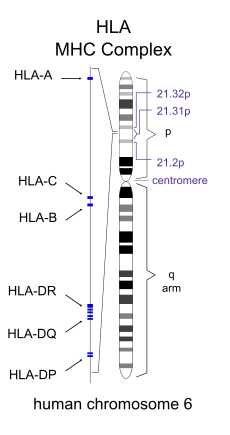
HLA type is determined by a group of genes called the Major Histocompatibility Complex (MHC), which is located on chromosome 6. We inherit one copy of each chromosome from each parent, so the mismatch to a parent or child should be 111 or better, and siblings are also likely to be good matches with an approximately 50% chance of a 111 or better mismatch to a sibling
Genetically identical twins have exactly the same genes, and so exactly the same tissue type and will not get rejection unless the immune system is malfunctioning and has produced antibodies to self. The first kidney transplants with long term success were between identical twins in the 1950s before modern immunosuppression was available.
The first class of HLA antigen has groups A, B and C. The second class of HLA antigen has groups called DP, DQ and DR. Groups A, B and DR are the ones most relevant to whether rejection occurs, and are the groups used in matching organ donors to transplant recipients.
Mismatches
Because we have two antigens for each of A, B and DR, we can be matched to one, both or neither of each when compared to a potential donor. We describe how well a potential recipient matches a donor as a mismatch using a set of three numbers: the first number is the number of HLA A mismatches, second number for HLA B and third for HLA DR. For example, a full match would be 000 and a complete mismatch would be 222.
While 000 might be considered a “perfect” match, any of 100, 010 and 110 mismatches are very good matches. Generally DR mismatches are better to avoid, and B mismatches are less desirable than A mismatches, but with modern immunosuppression, the risk of rejection is fairly low even with 222 mismatches.
The main issue with mismatches in 2019 is that if the first transplant eventually fails, the more mismatches there are the more antibodies will be formed, which limits future transplant options.
Antibodies
Although immunosuppression is very effective at preventing and controlling rejection, it is less effective at damage occurring due to antibodies, and so antibodies can still result in premature transplant failure.
If someone already has antibodies to other human tissue types before the transplant, these antibodies may attack and destroy the transplant rapidly - this is just antibodies doing their job very effectively: their aggression is why we get effective immunity to some infections after previous infection or immunisation. Reasons to have antibodies to other HLA types include previous transplants, blood transfusions and pregnancies.
When we get a transplant, transfusion or are pregnant, we are exposed to human cells with different antigens and thus form antibodies. We can also form antibodies to HLA without any of these events as some bacteria have antigens similar to human HLA antigens and we can form antibodies to those bacteria which also act against the similar HLA antigen.
The main issue is not so much the concentration of antibodies as the range of different tissue types to which they are directed. We measure the range as a “calculated reaction frequency” (cRF) which is the percentage of the last 10,000 UK deceased organ donors to whom a patient has antibodies.
When patients are assessed for a transplant, we test for antibodies and continue to monitor antibody levels while the patient is on the waiting list for a transplant. If antibodies to another tissue type are found, then it will not be possible to have a transplant from a donor with that tissue type, even if they would otherwise be a perfect match. Antibodies to HLA C, DP and DQ are just as relevant in this case.
Getting a transplant with antibodies
Having antibodies to other tissue types reduces the chance of a transplant, but there are ways for this to be taken into account to maximise the chance of transplant, and these depend on whether there is a living donor.
Patients with antibodies on the deceased donor waiting list get some prioritisation, depending on the level of antibody, so that patients with very high levels of antibodies get a high level of priority.
Patients with antibodies to the tissue type of a potential living donor will not be suitable for a transplant directly from that donor, but may be able to match to a compatible donor through the National Kidney Sharing Scheme.
Confirming compatibility
To confirm that there are no antibodies which will immediately destroy the transplant, we traditionally performed a test called crossmatch, where a lymphocytes (a type of white blood cell) from the donor were mixed with serum from the plasma of the recipient to ensure no reaction took place.
This process needs a number of hours to complete, so to minimise the time the kidney stays on cold storage, we now usually do a virtual crossmatch where the full donor tissue type is compared against the antibodies found in regular screening tests of the recipient while on the waiting list. This option is only available if the necessary blood tests have been done regularly, the antibody levels are not changing over time and the donor has a suitable tissue type to allow the virtual crossmatch to happen.
The micrograph of the HLA A68 antigen and diagram of the MHC on chromosome 6 are both by Philip Deitiker and have been released by him into the public domain. They were sourced at Wikimedia Commons.