
Kidney transplantation
Kidney transplants are major surgical operations that provide an alternative to dialysis for patients with kidney failure. The kidney comes from a living or deceased donor, and can be kept in cold storage for a few hours until it can be transplanted. For most patients a transplant is a better option than dialysis as transplanted patients usually live longer, have a better quality of life and fewer admissions to the hospital than patients on dialysis.
Most patients being considered for dialysis or already on dialysis will also be suitable for a kidney transplant, but there are a number of reasons why someone might not be suitable for a transplant or might need treatment to make them more suitable. Patients are initially assessed for transplant by their nephrologist (kidney doctor), and then referred to a transplant surgeon for further assessment if the nephrologist thinks that the patient is likely to be suitable for a transplant. More about transplant assessment
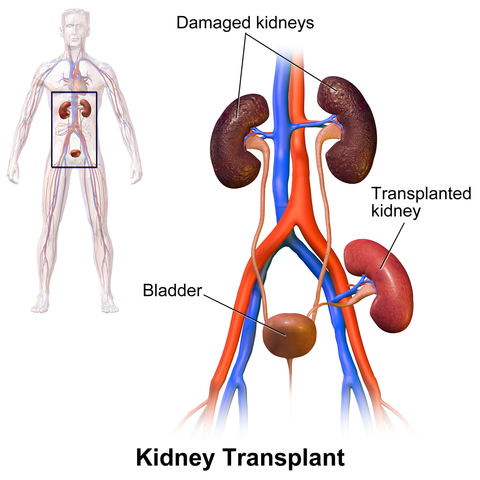
The kidney is transplanted into the lower abdomen, close to the bladder, and gets a blood supply by joining its artery and vein to a large artery and vein in the pelvis. The ureter (urine pipe) is then joined on to the bladder, and we usually protect this join with a plastic tube called a stent, which is removed under local anaesthetic several weeks after the transplant. Like any operation, complications can occur and can vary from minor to life-threatening. More about the transplant operation
The immune system will attack transplants as it sees them as being from someone else and treats them like bacteria or viruses: this attack is called rejection and to prevent it transplant patients need to take immunosuppressant (anti-rejection) drugs. Suppressing the immune system increases the risk of infections, and some additional medication may be needed to prevent certain infections; suppressing the immune system also increases the risk of developing cancer. More on immunosuppression
But although patients being considered for a kidney transplant need to be aware of the risks, for most patients the benefits of the transplant are greater than the risks, and it is usually the best option for treatment of kidney failure.
The kidney transplant diagram is by BruceBlaus and came from Wikimedia Commons.